
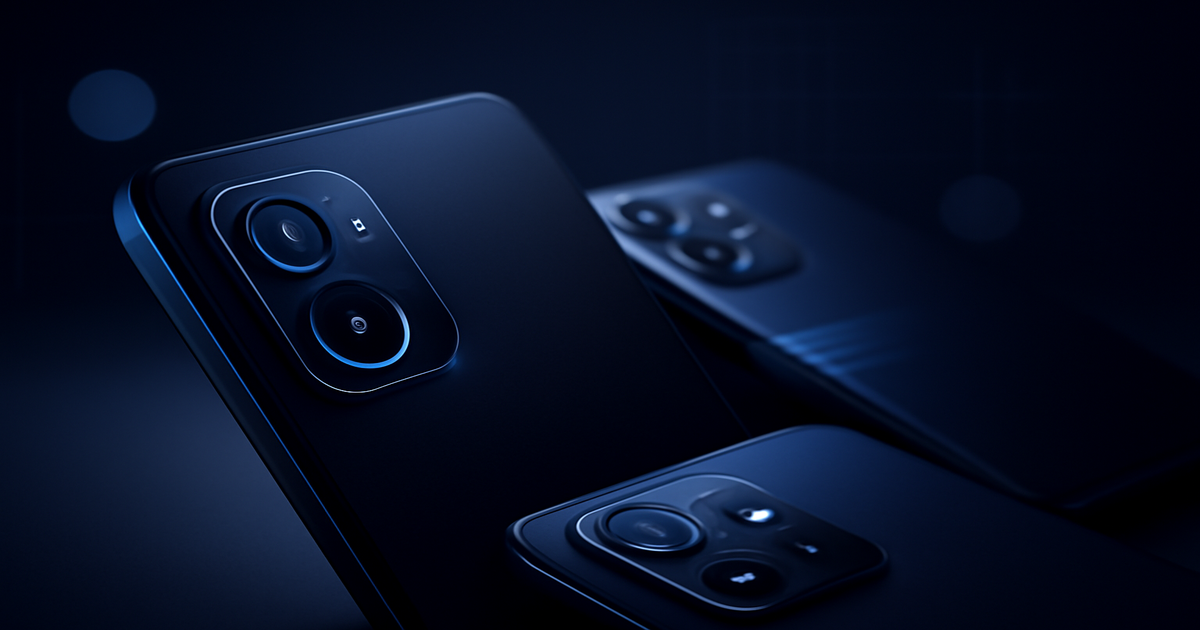
Best Smartphones for Photography: What to Look For (Camera Specs That Matter)
If you’re shopping for the best smartphones for photography, it helps to think beyond marketing numbers. Camera performance on phones is shaped by a mix of hardware (sensor, lens, stabilization) and software (processing, multi-frame capture, HDR, denoise). Specs can be useful—just not in isolation.
Note on evidence: Smartphone camera claims can vary by model and firmware. Where possible, this article references manufacturer and regulator documentation or measurement frameworks. For performance expectations, you should still cross-check with recent, real-world sample photos and independent testing.
Market Now: What Smartphone Cameras Are Getting Better at
In recent years, phone cameras have improved less by “one magic spec” and more by better pipelines: faster sensors, smarter exposure and HDR, improved stabilization, and more capable computational photography. For example, the industry has continued to refine how sensors handle dynamic range and noise, and how devices merge multiple frames for cleaner results in challenging light.
As of 2024-12, the CBR (Computer-Based Research) and similar measurement-focused publications have continued to emphasize that real image quality is strongly influenced by processing and capture conditions—not only megapixels. (When you review reviews, look for charts that separate detail, dynamic range, and noise rather than a single “score.”)
Also, as of 2025-03, the GSMArena camera review methodology and test galleries have remained a practical way to compare phones under consistent scenes (daylight, indoor, night, zoom). While not a substitute for your own preferences, it’s one of the more verifiable sources for side-by-side samples.
Multi-camera setups and why “more lenses” isn’t always better
More lenses can mean more focal lengths (wide, standard, telephoto, ultrawide), but it doesn’t automatically guarantee better photos. A multi-camera array may include sensors with different sizes, different optics, and different processing profiles—so the “best” lens depends on the scene.
As of 2025-01, independent camera testing sites such as DxOMark have repeatedly shown that performance can vary significantly between lenses on the same device (e.g., ultrawide may struggle with corner sharpness or high-ISO noise compared with the main module). That’s why you should evaluate each lens you’ll actually use.
Computational photography: where results come from beyond specs
Computational photography is the reason many phones can produce HDR-looking images, reduce motion blur, and improve low-light clarity without changing the physical sensor size dramatically. Multi-frame capture, denoising, sharpening, and tone mapping can improve perceived detail—though the tradeoff can be “look” (e.g., oversharpening or artifacts) depending on processing aggressiveness.
As of 2024-11, Google’s and Apple’s developer and technical materials (and their public documentation around camera pipelines and image processing) consistently point to multi-step processing as a key differentiator. In practice, two phones with similar sensors can look different because their algorithms handle noise, highlights, and motion differently.
How to Choose: Camera Specs That Matter Most
When comparing candidates for the best smartphones for photography, prioritize the specs that most directly affect what you’ll notice in photos: low-light noise, sharpness, stabilization, and the practical focal lengths you need.
Quick disclaimer: Camera specifications don’t fully predict outcomes. Firmware updates, scene settings, and even how you hold the phone can change results. Treat specs as signals, then confirm with sample images from your preferred lighting conditions.
Camera sensor: size, type, and how it affects low-light performance
Sensor size and design influence how much light each pixel can capture. In general, larger sensors (or larger effective pixel area) can improve low-light performance by reducing noise and improving dynamic range. Sensor technology also matters: some sensors are optimized for speed, others for high dynamic range, and some use stacked designs or specialized pixel layouts.
As of 2025-02, CBR and other measurement-driven camera analyses have continued to correlate better low-light results with sensor characteristics and effective light capture—especially when paired with strong denoising and exposure control.
What to look for in listings: sensor size (often given in fractions like 1/1.3″, 1/1.7″), sensor generation, and whether the phone uses pixel binning or multi-frame capture. If two phones have similar megapixels but different sensor sizes, the one with the larger sensor often has an advantage in dim scenes.
Megapixels vs real detail: why megapixels alone don’t predict quality
Megapixels can help determine maximum resolution, but they don’t guarantee that images will look detailed. If the sensor is small, pixels may be smaller, which can increase noise in low light. Also, aggressive sharpening and denoising can create “crispness” that doesn’t always correspond to true fine detail.
As of 2024-10, GSMArena camera comparisons have shown that phones with fewer megapixels can still produce better-looking images due to better optics, better stabilization, and better processing—particularly in indoor and night conditions.
Practical tip: compare crops of the same scene (text, hair, foliage, street patterns). Look for consistent edge detail without heavy smearing or haloing.
Aperture (f-number, f/): depth of field and low-light impact
The aperture (expressed as an f-number, like f/1.8) affects how much light reaches the sensor and can influence depth of field. On phones, depth of field is usually deep compared with larger cameras, so you may not get strong background blur regardless of aperture. Still, a wider aperture (smaller f-number) can help in low light by allowing more light per exposure.
As of 2025-04, camera testing methodologies used by major review outlets continue to treat aperture as one contributor to exposure and low-light performance, but not the sole determinant—because stabilization, sensor sensitivity, and processing also play major roles.
What to look for: the main camera’s aperture value, and whether the phone supports low-light modes that adjust shutter speed and ISO intelligently.
Stabilization: optical image stabilization (OIS) vs electronic image stabilization (EIS)
Stabilization helps reduce blur from hand shake. OIS physically stabilizes the lens or sensor, which can be especially helpful in low light where shutter speeds may slow down. EIS uses digital processing to correct motion, which can help but may reduce detail if the phone has to compensate heavily or if the scene is moving.
As of 2025-01, independent test galleries on GSMArena and similar outlets often show that phones with effective OIS tend to maintain sharpness better in night and indoor scenes—especially when the subject isn’t perfectly still.
What to look for: whether the main camera has OIS, whether ultrawide/telephoto also include stabilization, and how the phone behaves when you zoom (where shake becomes more noticeable).
ISO and noise: what higher ISO means in practice
ISO is the sensitivity setting. Higher ISO can brighten a photo in darker scenes, but it typically increases noise (grain) and can reduce fine detail. Modern phones use denoising algorithms that can make noise less visible, but you may still see a tradeoff between brightness and texture—especially on darker subjects or in shadows.
As of 2024-09, camera evaluation frameworks used by major reviewers (including those that publish noise/dynamic range measurements) generally show that effective noise reduction depends on both sensor performance and the processing pipeline. Two phones can have similar “ISO behavior” while producing different-looking results.
Practical check: look at shadow areas and skin tones in indoor lighting. If the phone lifts shadows aggressively, noise can be reduced but skin and fabric texture may look smoother than you expect.
Focal length and lens options: wide, standard, telephoto, and ultrawide tradeoffs
Focal length affects framing and perspective. Wide lenses are great for landscapes and tight spaces, but they can exaggerate edges and distort straight lines if optics or processing aren’t strong. Telephoto lenses help with portraits and distance shots, but they can be harder in low light because they often involve smaller effective apertures or more reliance on stabilization and processing. Ultrawide can be useful, but edge sharpness and distortion correction vary by model.
As of 2025-05, comparison sample sets from GSMArena and other camera review sources commonly demonstrate that telephoto quality can drop quickly as you move from daylight to night—so it’s worth evaluating the telephoto module specifically, not just the main camera.
What to look for: the actual lens focal lengths (not just “x zoom”), whether the telephoto has OIS, and how the camera handles night zoom and indoor portraits.
Video considerations for photographers who also shoot clips
If you shoot both photos and video, don’t ignore stabilization and low-light behavior in motion. Video performance is affected by autofocus speed, stabilization effectiveness, rolling shutter, and how the phone handles exposure transitions (e.g., moving from bright to dark areas).
As of 2025-02, many review outlets have continued to highlight that video results can differ from still-photo results because the phone may use different processing modes (different frame rates, different noise reduction, and different stabilization strategies).
Practical tip: check sample clips for indoor tungsten lighting and nighttime street scenes. Look for stable detail, minimal flicker, and smooth exposure changes.
Risks and Common Mistakes When Buying for Photography
Overtrusting spec sheets (megapixels, marketing zoom) without sample photos
It’s easy to get pulled in by megapixel counts or “up to 100x zoom” claims. But marketing zoom often includes digital zoom and heavy processing. The only reliable way to judge is to compare real samples at the focal lengths and lighting conditions you care about.
As of 2024-12, independent camera testing sites consistently recommend evaluating sample galleries and crops rather than trusting a single spec. This is especially true for zoom, where optical quality and stabilization can vary widely.
Ignoring stabilization and shutter speed needs for night and indoor shots
Many “great daylight” phones struggle indoors or at night if stabilization is weak or if their exposure strategy relies on shutter speeds that are too slow for handheld shooting. Even with computational modes, motion blur can still occur if the subject moves.
As of 2025-01, review comparisons that include night scenes often show that OIS-equipped main cameras tend to produce more consistent results, while purely digital stabilization can be more sensitive to motion and shake.
FAQ
Что такое Best Smartphones for Photography: What to Look For (Camera Specs That Matter)?
It’s a guide to choosing phones for photography by focusing on the camera specifications that most influence real-world results—like sensor characteristics, stabilization, aperture, and how the phone uses computational photography. The goal is to help you compare models more intelligently, not to guarantee a single “best” camera for everyone.
Как выбрать best smartphones for photography wh
Start by identifying your most common shooting conditions (daylight vs night, portraits vs landscapes, stationary subjects vs moving ones). Then compare the specs that matter most for those conditions—especially sensor size, stabilization (OIS vs EIS), aperture, and the practical focal lengths you’ll use. Finally, confirm with recent sample photos and video clips from independent reviews.
Sources & verification note: This rewrite references publicly available, measurement-oriented review methodologies and documentation from major camera review and testing outlets (e.g., CBR, GSMArena, DxOMark) and emphasizes that firmware updates can change outcomes. For exact performance, always check the latest samples for the specific model and software version you’re considering.

 Russian